Art of Kutch Batik
Batik in Kutch has grown into a separate art form as a result of centuries of textile production and commerce. The artisans of the Khatri community have conserved and developed this tradition, producing fabrics with bold geometric designs, delicate floral motifs, and vibrant colour palettes. Each item shows the labor-intensive process, which requires perfection in wax application, dyeing skill, and a strong sense of design.
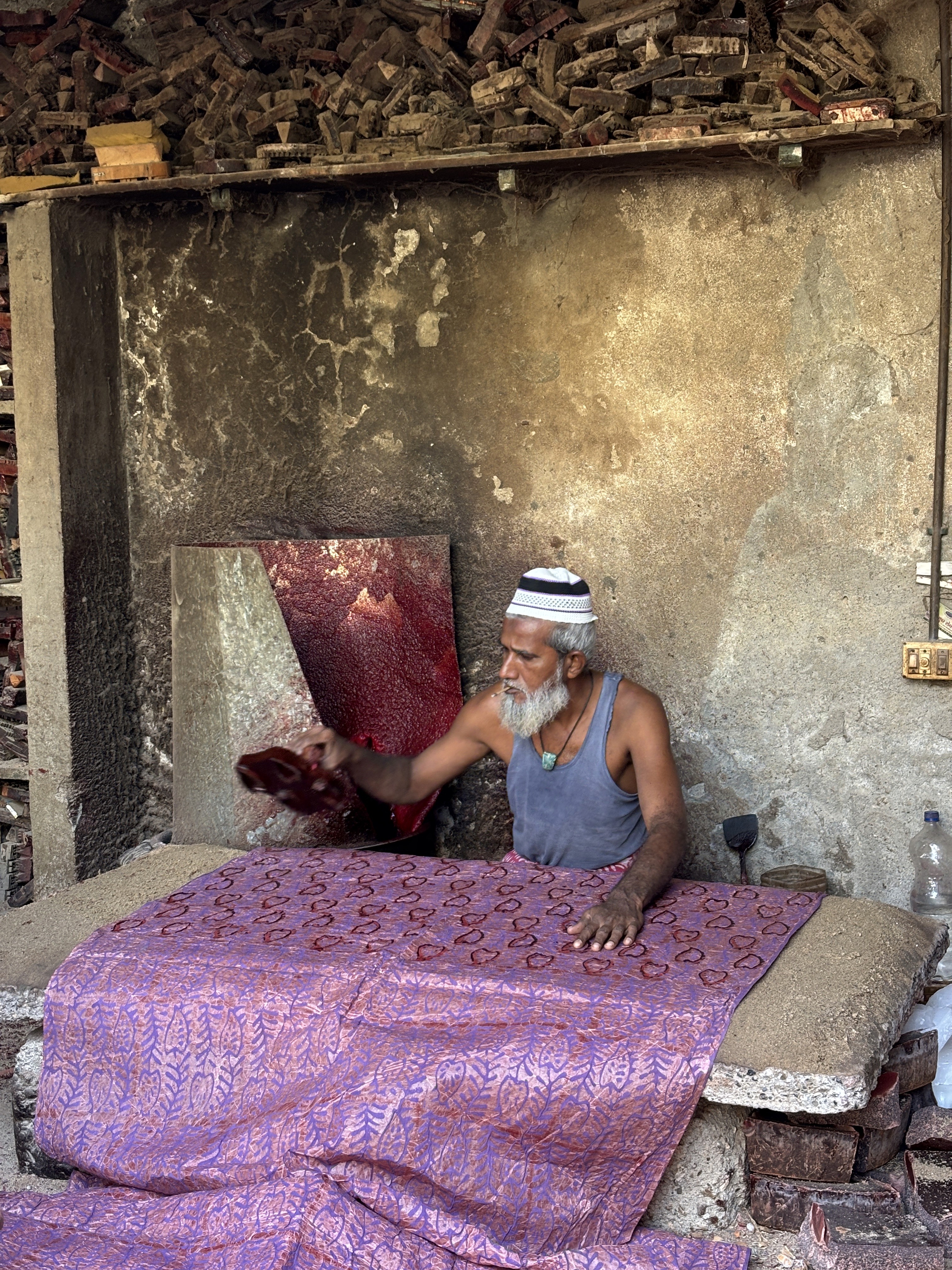
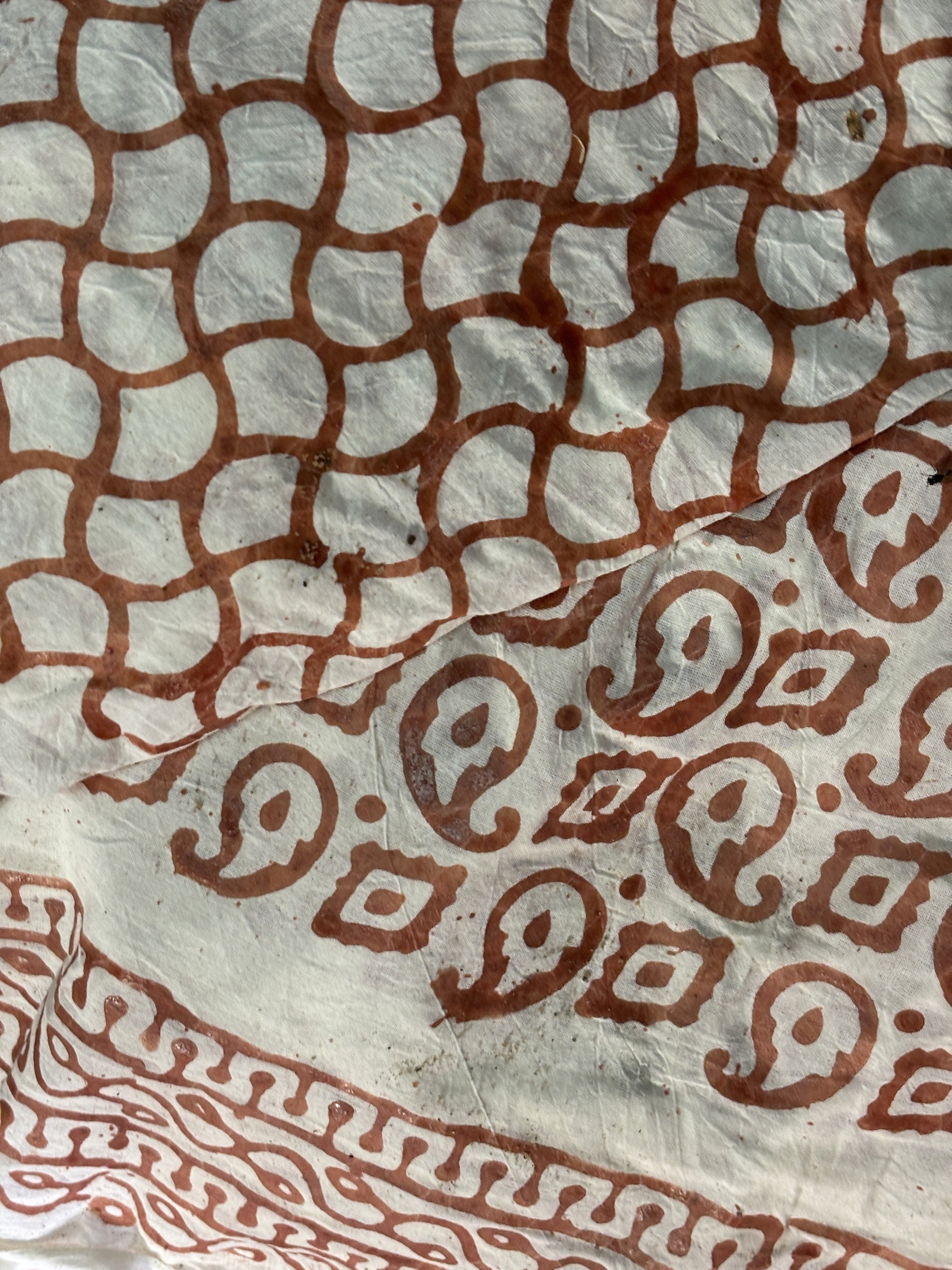
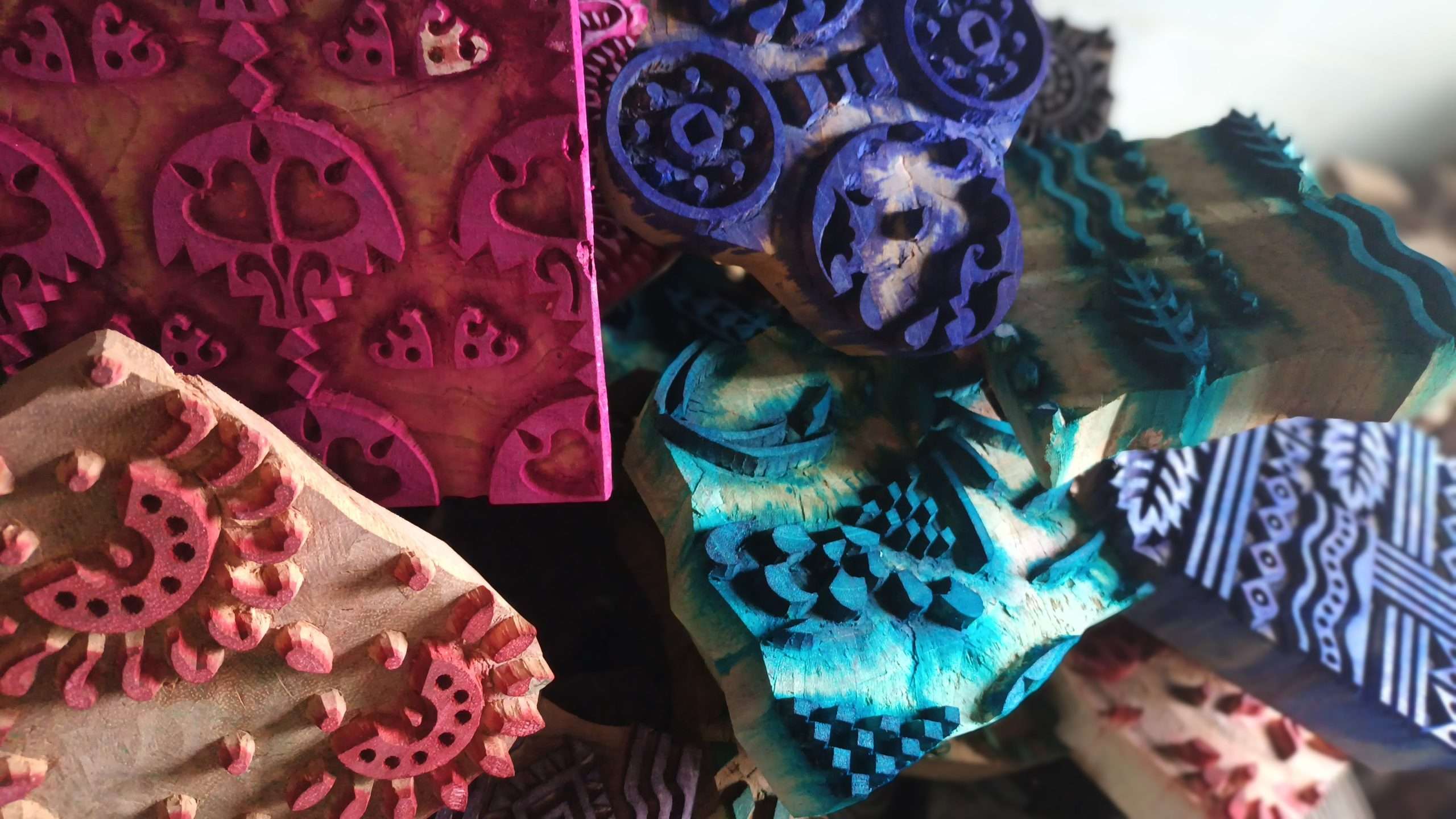
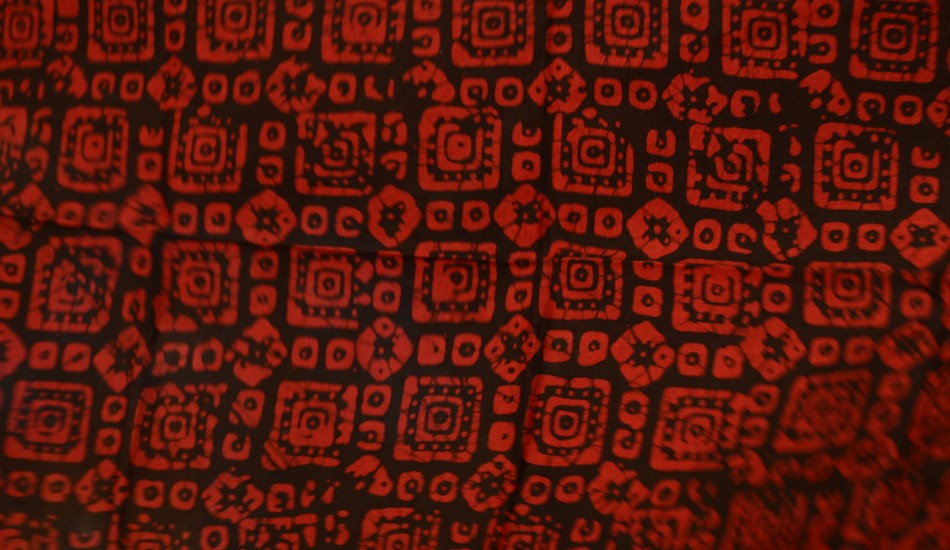
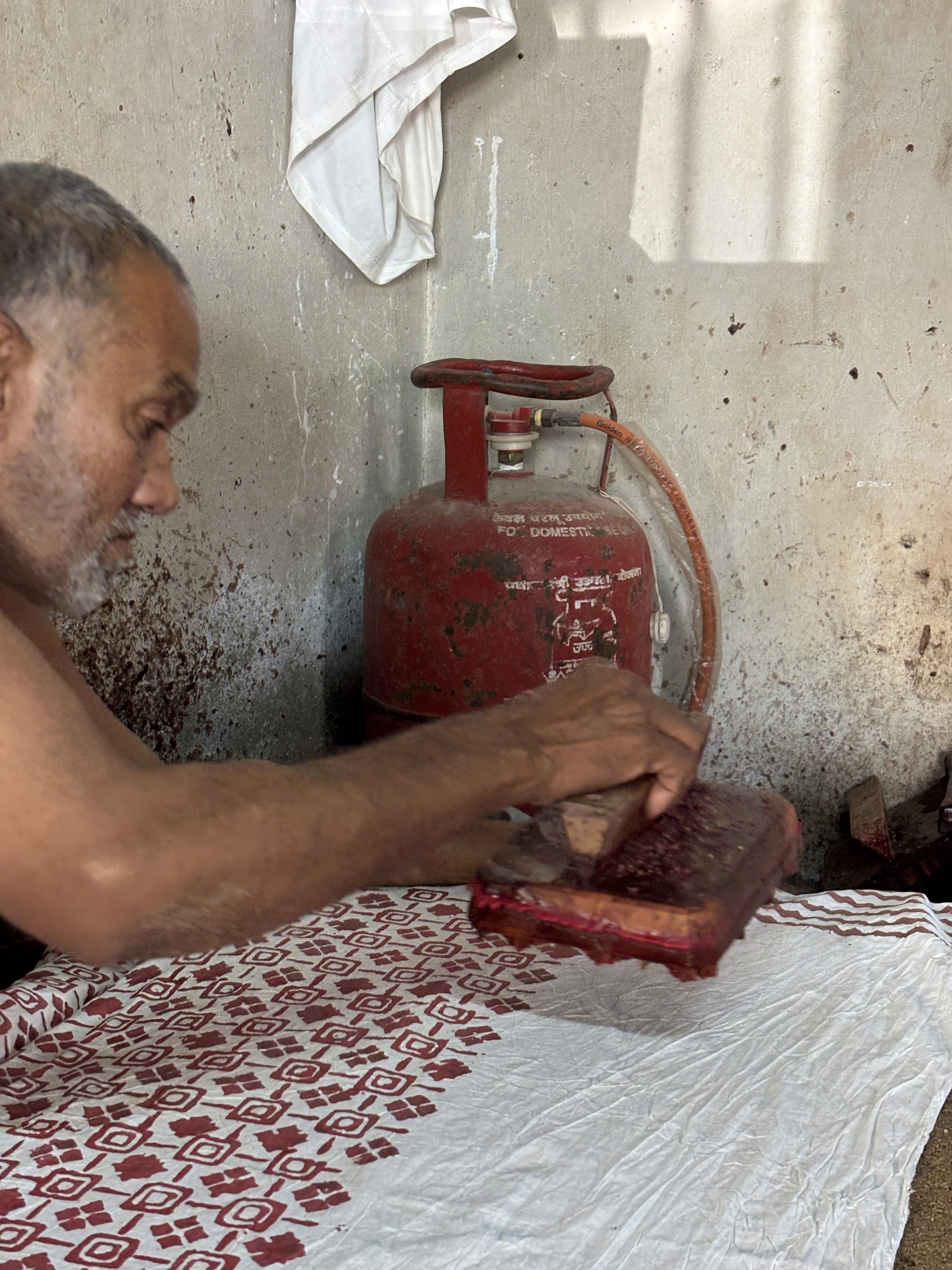
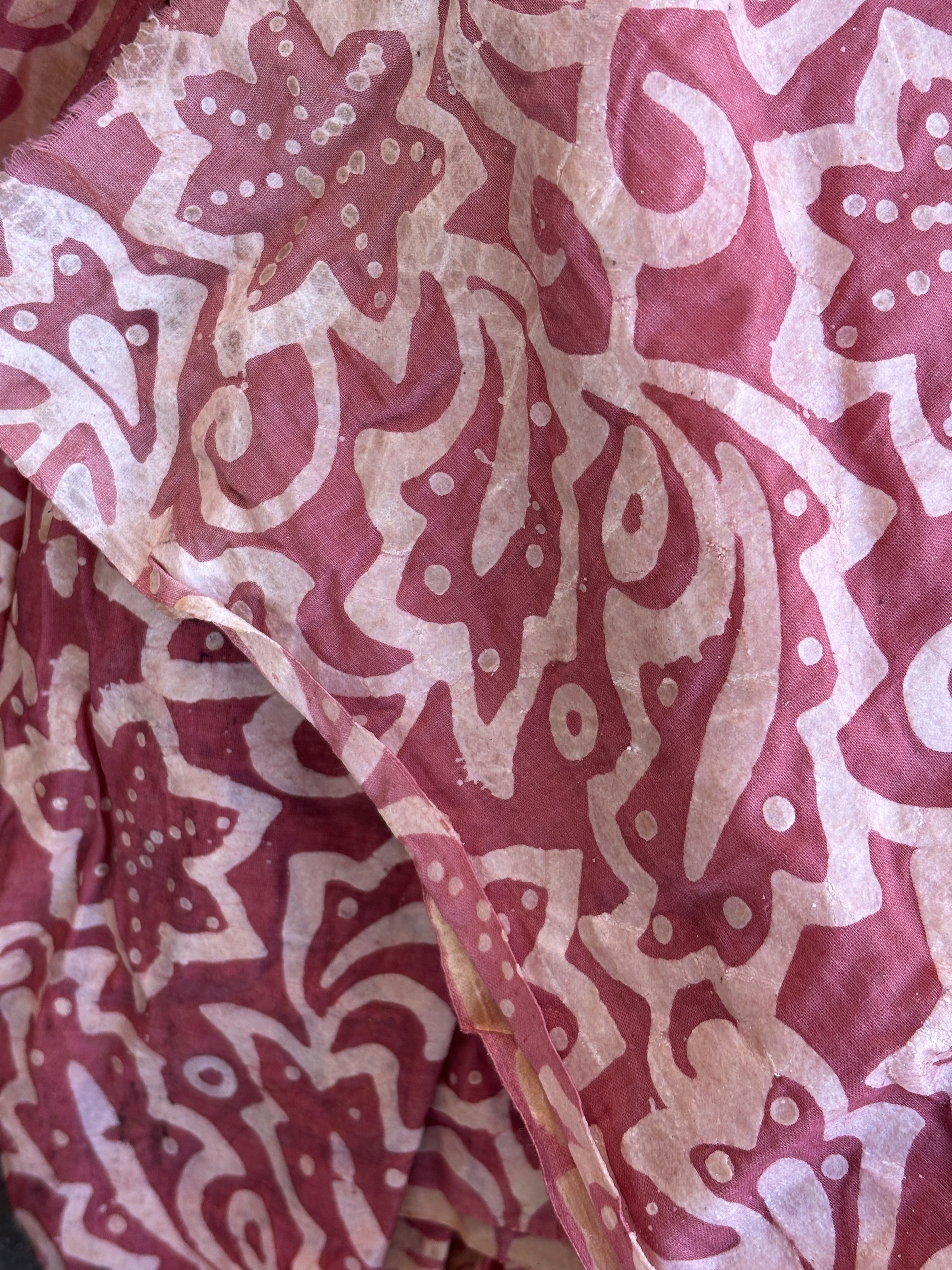

In the art of batik block printing, Bunta (hand carved wooden blocks) play a central role. Crafted from durable teak , Sheesham wood these blocks come in a variety of sizes, shapes, and intricate designs, each carefully carved by artisans. The front face of the block bears the carved motif, while the reverse side features a sturdy wooden handle that allows the artisan to grip and stamp it with precision.Here, the block is dipped in hot wax instead of colour, and then stamped onto the fabric. The waxed areas resist the dye when the cloth is later immersed in colour, creating beautiful, layered patterns once the wax is removed. In India, batik art is now mainly produced in various centres in Gujarat (Mundra, Bhujodi and Mandvi), Madhya Pradesh (Indore, Bhairavgarh) and Rajashthan (Jaipur, Bagru).
Block Batik
Hand Batik
Wax is applied freehand with a brush or stylus, known as a kalam.The traditional technique where intricate patterns are drawn onto the fabric with a canting or pen. This method allows for detailed and unique designs, often with a focus on the artist's individual style. It is well-established in West Bengal, particularly in areas like Santiniketan and Bolpur. also in Odisha, and Tamil Nadu, each reflecting local art and culture. While Shantiniketan's style is painterly and poetic, Odisha's is narrative and temple-inspired, and Tamil Nadu’s is folk-based and contemporary.
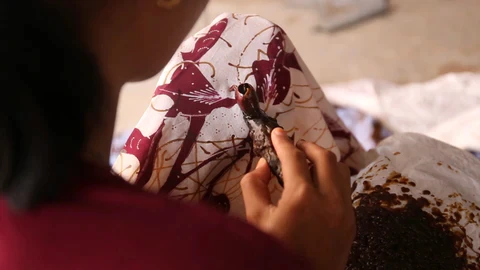
Batik is an Indonesian dyeing technique which uses a wax-resist dyeing technique all over the cloth to create gorgeous patterns and designs. These patterns are mostly done through dots or lines with tools named canting and cap. There are various types of batik techniques that are practised throughout the world. This list features Batik Lukis, Tie Dye Batik, Batik Blok, and Tulis.
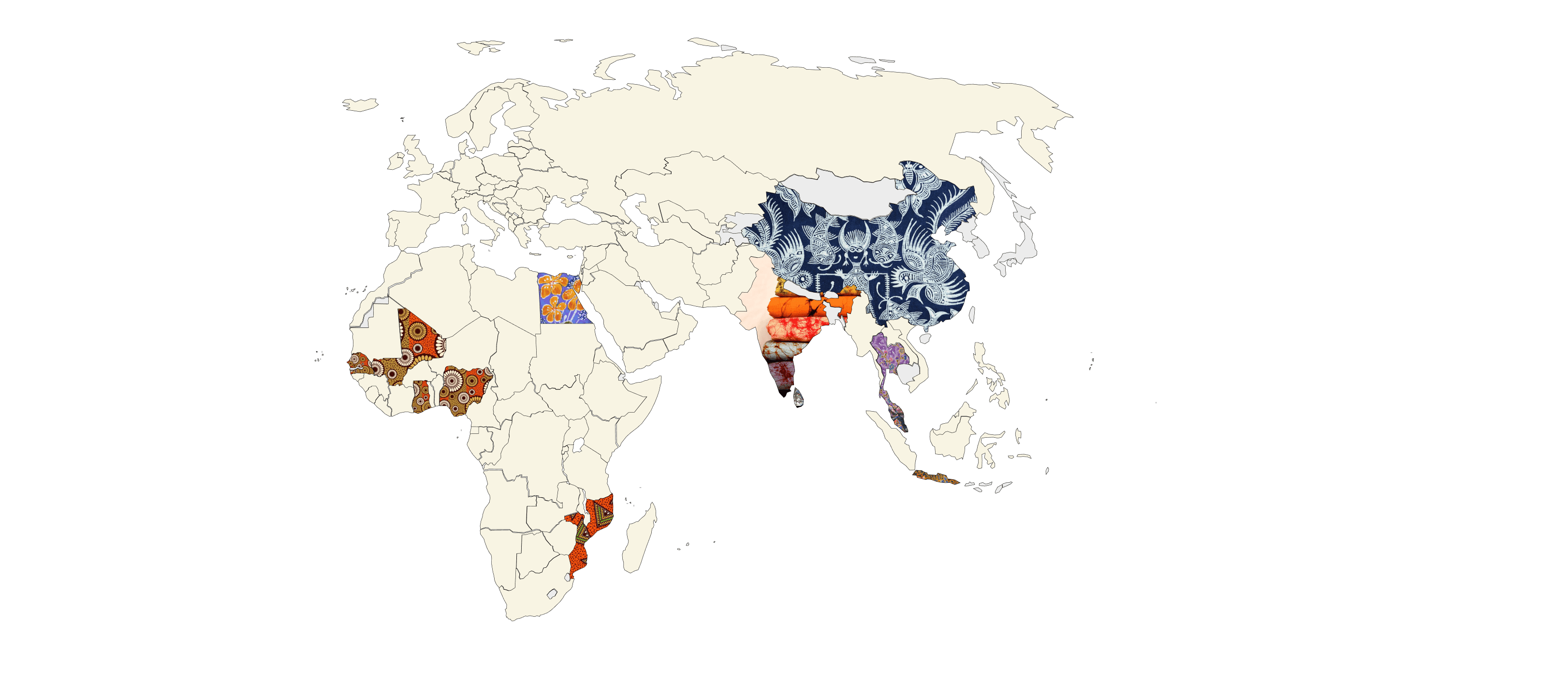
The name Batik derives from the Javanese term ambatik, which means "to dot" or "to write with wax'', artists apply molten wax to fabric, forming a resist that molds intricate designs when dyed is globally known as the Indonesian dyeing technique that was introduced in the 12th century. On the contrary side, some theories also claim it to have originated in Sri Lanka during the 6th or 7th century. Besides Sri Lanka and Indonesia, the Middle East, Thailand, Africa, Malaysia, India, China, and the Philippines also practised this art in the ancient period. The evidence of practising batik in India has been found in Maharashtra State during the early 19th century.
This laborious method, which expresses identity, patience, and talent. Batik brings textiles to life with each layer of wax and dip in dyes, conserving age old traditions while exploring new artistic possibilities.
About Batik
What is Baat?
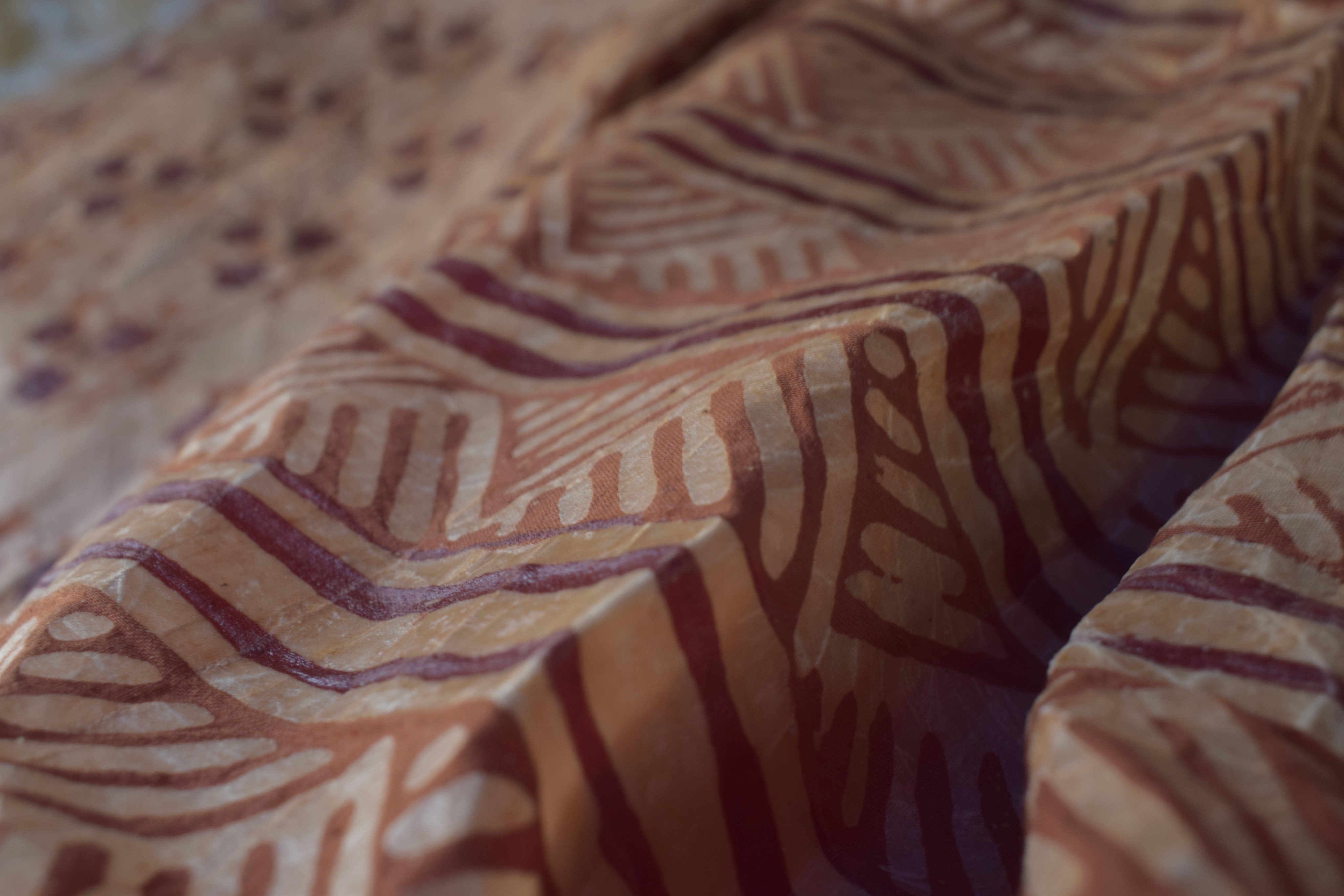
In batik "Baat" refers to the characteristic crackled or textured effect that appears on the fabric when wax is applied and removed during the dyeing process. It's a distinctive feature of batik, especially in traditional methods where wax is applied with a tool, resulting in a unique visual texture.


Get Updated news your Inbox
Your Email
Subscribe
copyright 2025 Batik of Kutch. All Rights Reserved
Privacy Policy
Terms & Condition
Uniquness of Batik of Kutch
Carved Wooden Blocks
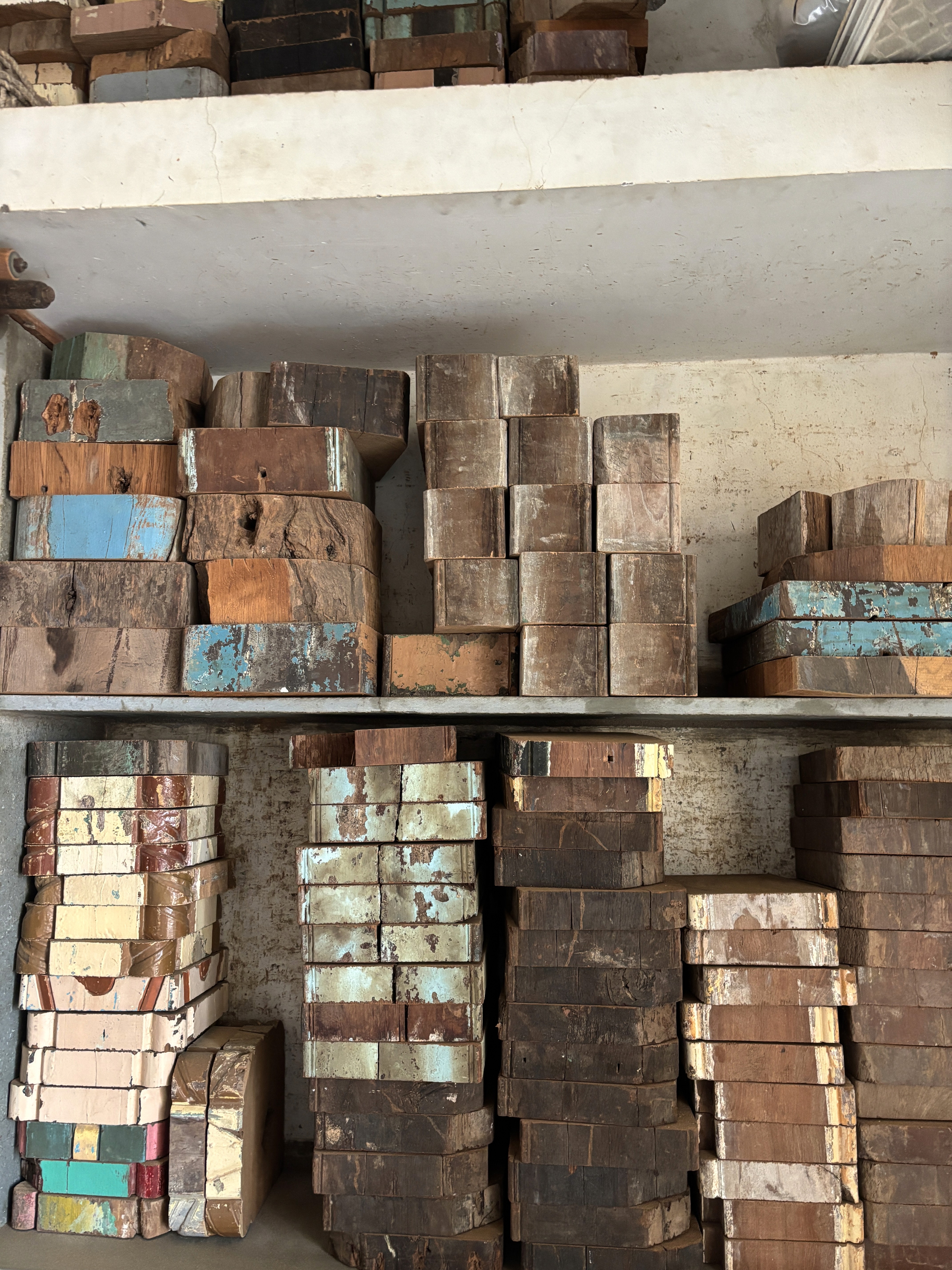
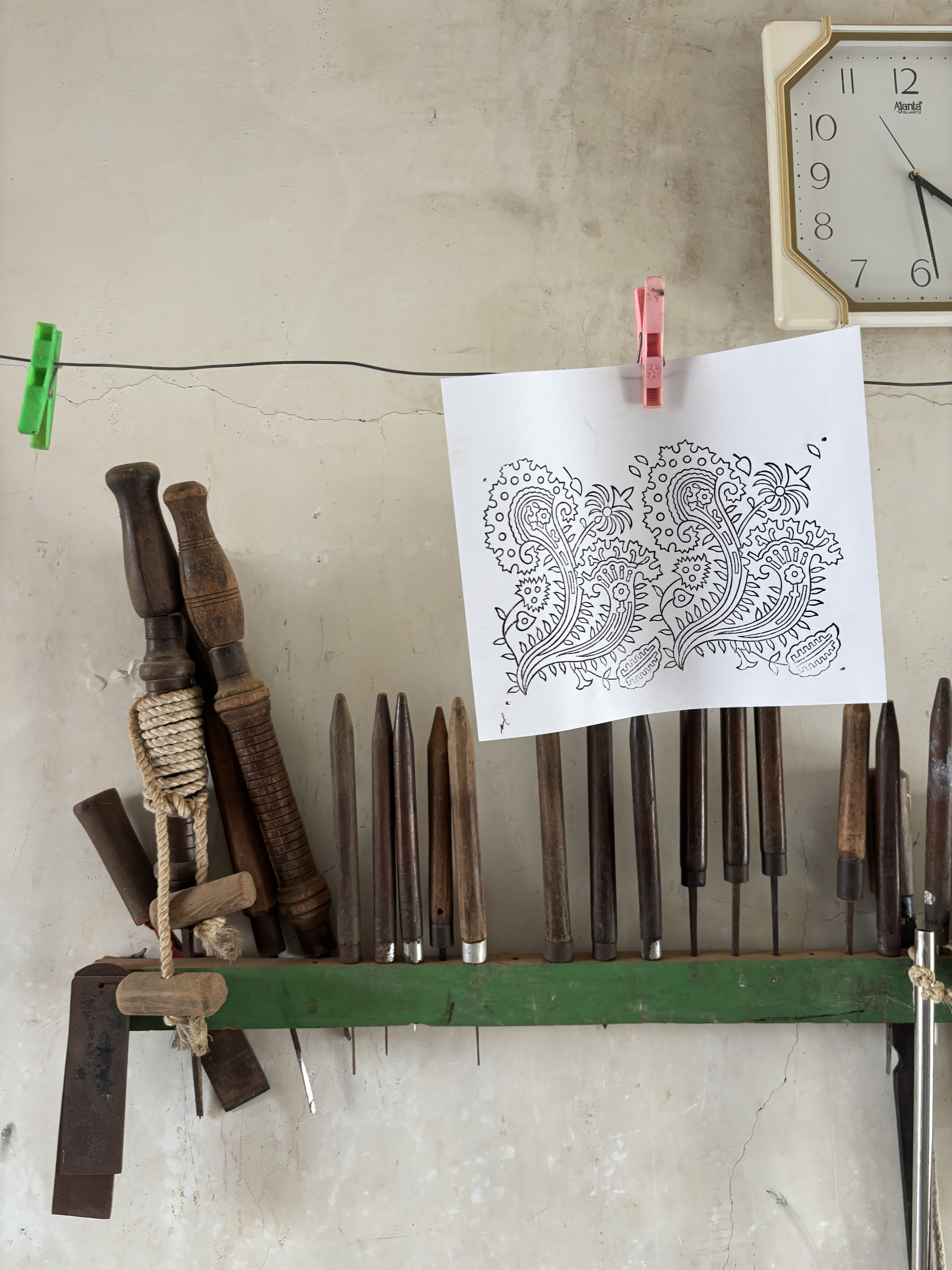
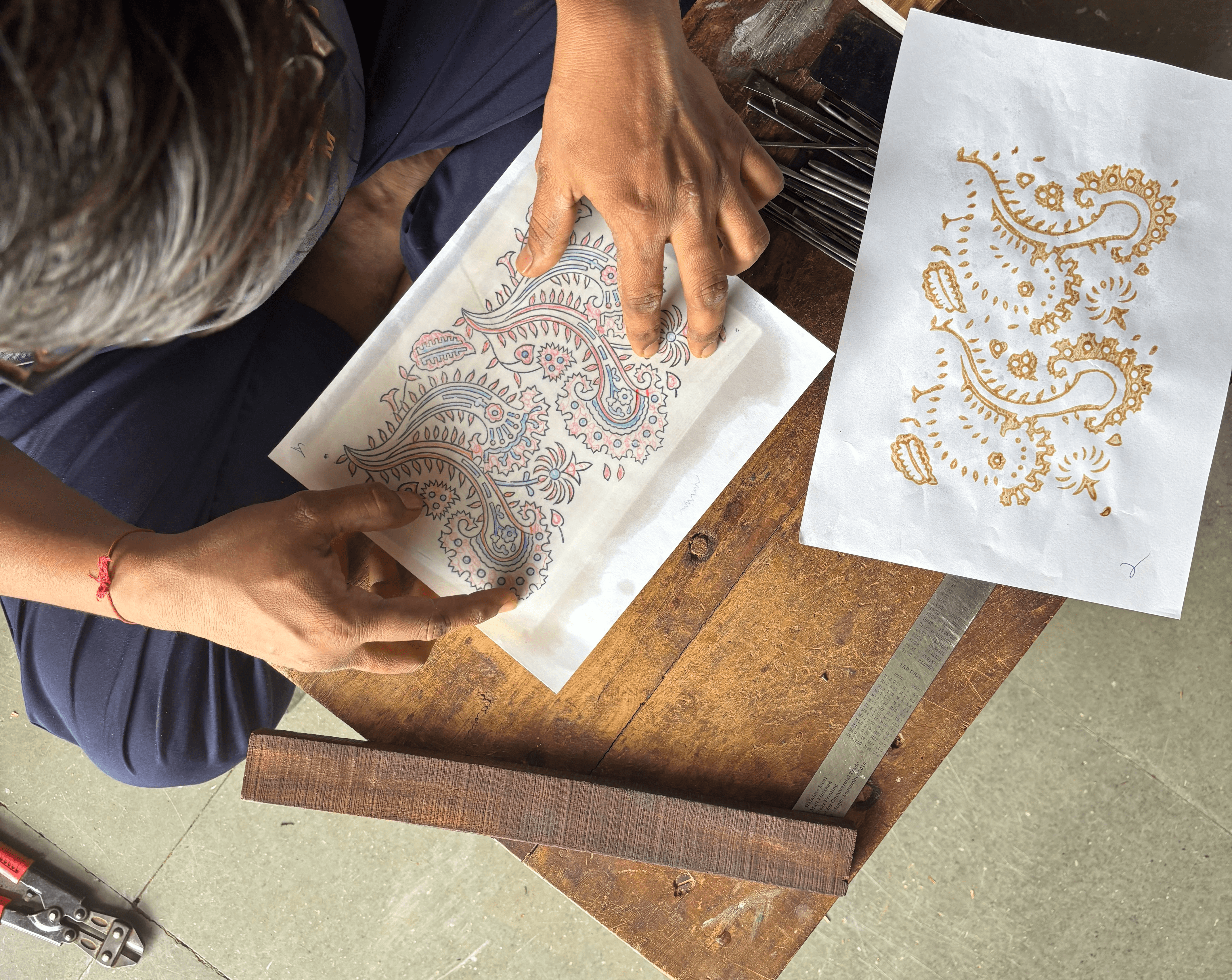
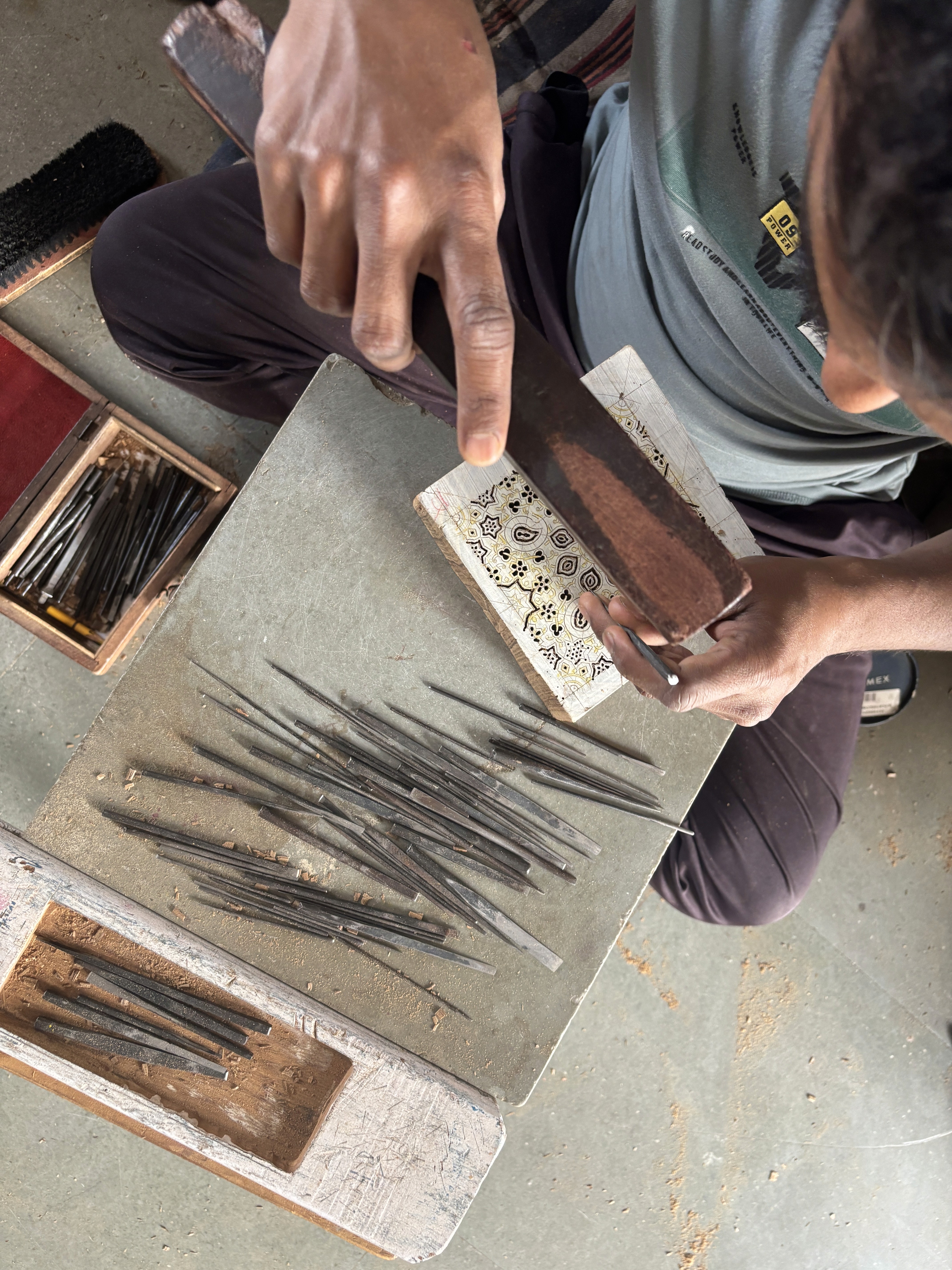
The village of Pethapur is one of the remaining traditional block cutting centres in India. The village is near Gandhinagar in Gujarat.
The hand drawn design is transferred to tracing paper as a mirror image of the original design.
The outline is engraved onto the planed block of teak wood, using a tool that punctures the wood through the tracing paper.
The design is then carved into the block, using chisels and manual drills.
The block goes through a seasoning process, strengthening the block.
The new block is painted white.
A test print is done before sending the block to the printers.
It can take 1 – 7 days to carve a printing block.
A unique feature of Kutch Batik blocks is the use of high-quality teak (Saagwaan) wood, known for its wide grain, which makes it ideal for detailed carving. The block sizes typically 7×7 or 3×4 inches have remained the same for centuries, designed to fit comfortably in the hand for long use. Their weight is carefully balanced not too heavy or light to ensure smooth carving and consistent stamping without chipping.
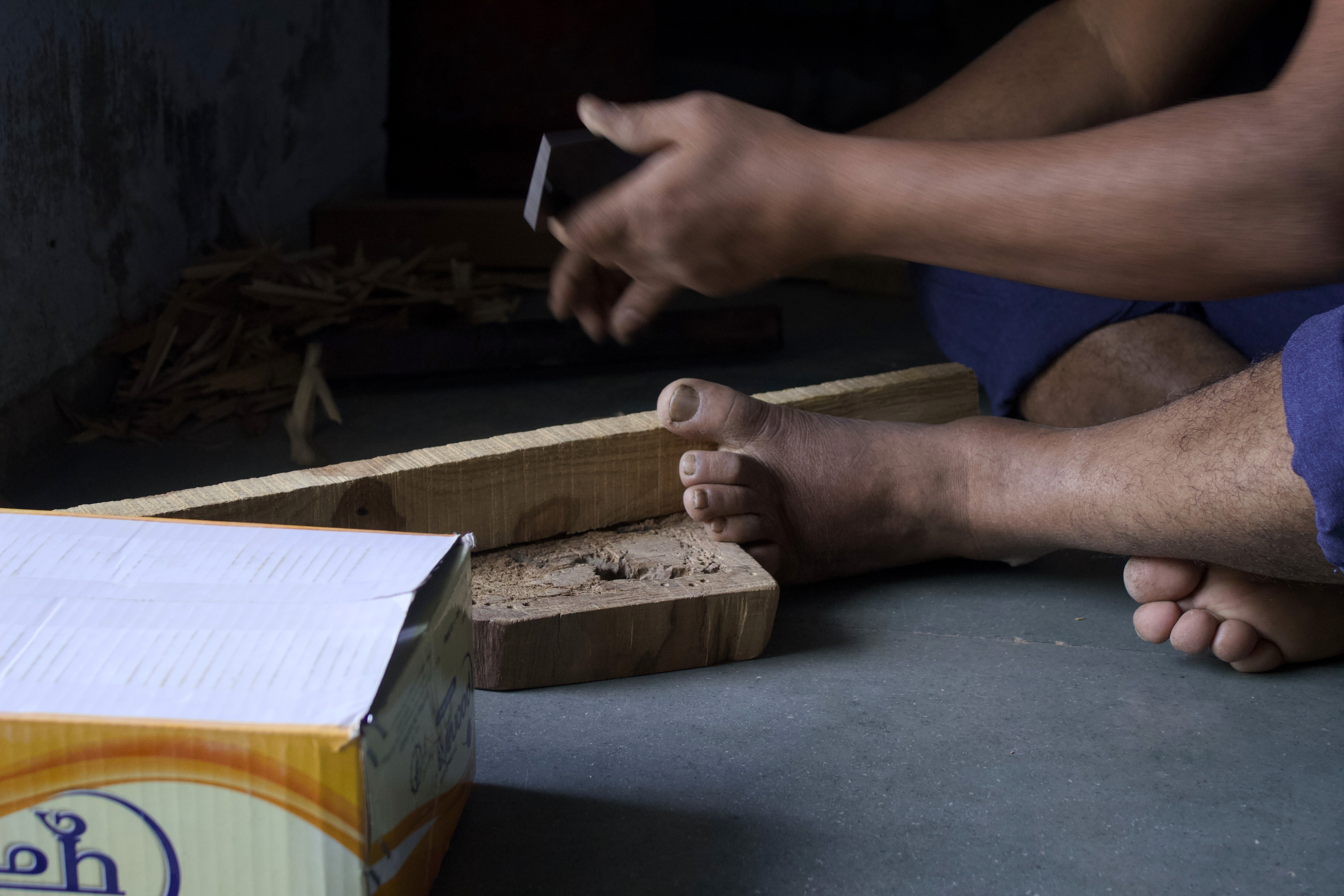
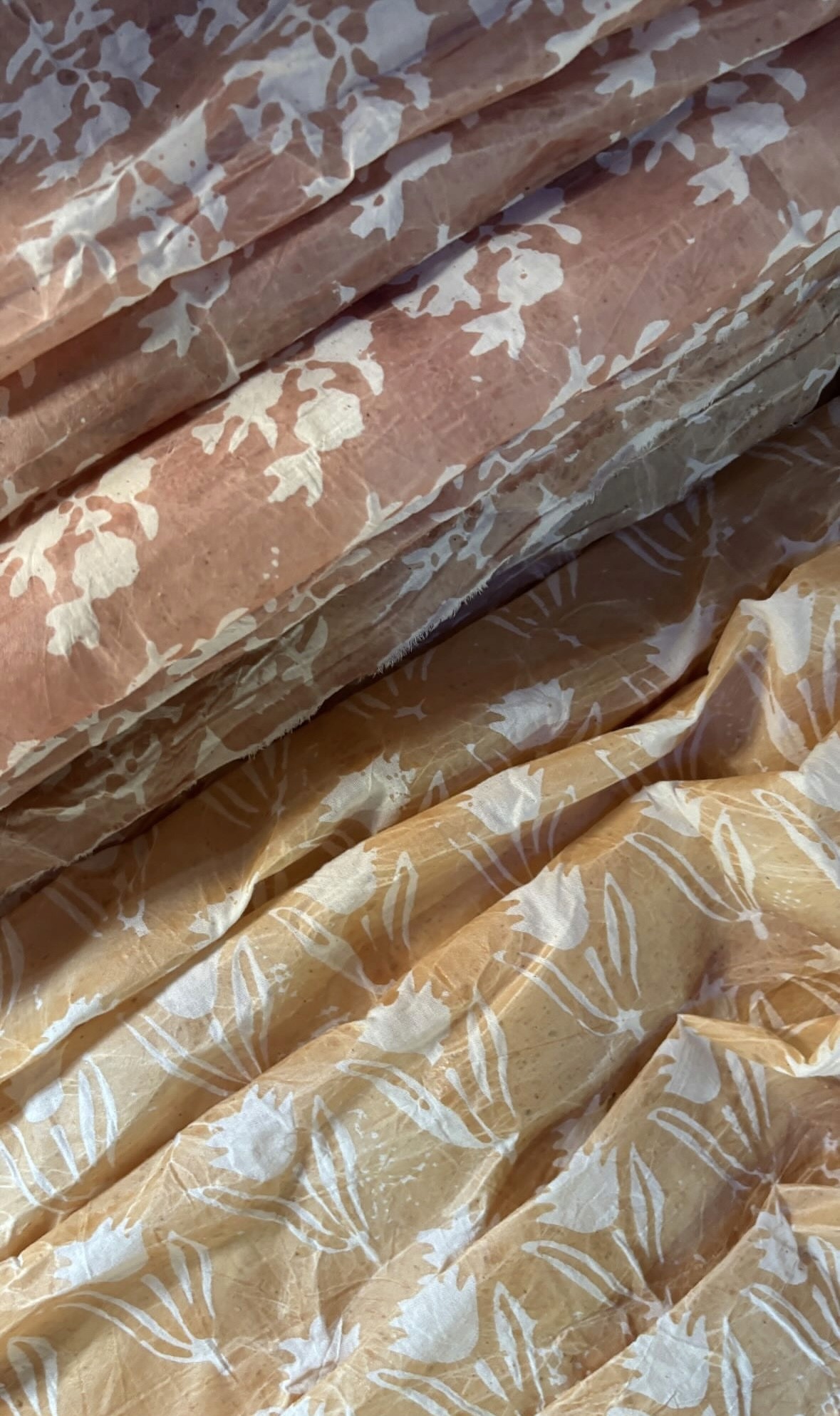
Kutch Batik is unique because it uses carefully carved wooden blocks to apply wax. Creating patterns that look precise and balanced. Unlike other batik styles in India, which use freehand methods with brushes, Kutch batik’s block printing gives it an edge.
The fine crackle lines in Kutch batik add a soft texture that doesn’t take attention away from the main design. In comparison, other batik styles like Ujjain batik use thicker wax layers for brushes and hand blocks, which create bold, strong and large crackle patterns that stand out more.
Kutch has a hot, dry climate with low humidity, which helps the wax in batik dry and crack slowly, creating the fine, delicate crackle patterns unique to Kutch batik.
Kutch Batik Design Motifs often include geometric shapes, dots, floral repeats, and border patterns.
This combination of blocks from Pethapur, baat, natural colours and Kutch's climate make this batik unique among Indian batik traditions.
Trimmed and rounded edges Blocks
Wood is Polished and Cut fro making Blocks
Engraving into the blocks
Tools Used for Making Blocks